Mortimer Street, London W1W: The complete guide


Mortimer Street London W1 sits at the heart of Fitzrovia Quarter, running east–west between Langham Place/Regent Street and Cleveland Street. It’s compact, walkable, and layered: listed façades, creative workspaces, design showrooms, independent cafés, and a growing food scene all line the same corridor.
This guide keeps things practical. You’ll get a quick read on history and landmarks and a curated dining and shopping guide, all in one piece of content. So, if you’re curious about Fitzrovia, Mortimer Street is the ideal first pass – authentic, compact, and high-signal.
A street with layers of history
Mortimer Street has always been more than just a thoroughfare. Born in the 18th century as part of the Harley–Portland estate, it carried the name of Edward Harley, Earl of Oxford and Mortimer, and quickly became a canvas for London’s evolving architecture. The Victorian era left its strongest imprint with landmarks such as All Saints Church, William Butterfield’s bold Gothic design that still dominates the skyline.
The early 20th century introduced Edwardian elegance through buildings like Radiant House and No. 93, both now Grade II listed. Wartime damage reshaped parts of the street, but reconstruction after WWII blended older façades with modern structures. Today, the story continues with creative interventions such as the mural Threads in Common, a tribute to Fitzrovia’s garment trade.
What emerges is a layered streetscape – one that tells a story of resilience, reinvention, and London’s talent for carrying history forward while embracing the present.
Mortimer Street now: Some cool places to drop a visit
What makes Mortimer Street different is that its venues don’t exist in isolation – each one reflects a layer of Fitzrovia’s wider story. Step inside and you’re not just grabbing a meal or browsing clothes, you’re stepping into the district’s rhythm.
-
1. Places for shopping
- ★ Y London (71 Mortimer St): Not a high-street chain but a curated boutique, Y London thrives on offering labels you’d struggle to find elsewhere.
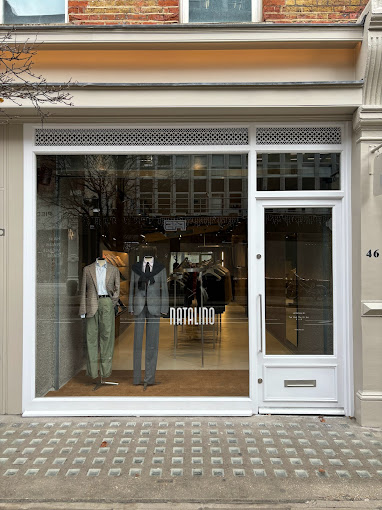
- ★ Natalino (46 Mortimer St): Its focus on clean Italian lines and made-to-last quality echoes the area’s history of garment making, when the streets around Mortimer buzzed with textile workshops.
2. Places for your ultimate self-care day
- ★ Pied de Poule (67 Mortimer St) Housed in a listed townhouse, Pied de Poule treats grooming as lifestyle design.
- ★ Wumman Spa (51 Great Portland St) Rooted in traditional Asian therapies, Wumman Spa offers a reminder of how international Fitzrovia has always been.
- ★ Ab-Anbar Gallery (34 Mortimer St) A contemporary art gallery that gives space to underrepresented voices, Ab-Anbar bridges London with Tehran and beyond
- ★ WORKPLACE (50 Mortimer St) It’s known for spotlighting mid-career and emerging artists, where visitors can encounter challenging, thoughtful art.

3. Places for work-friendly spaces
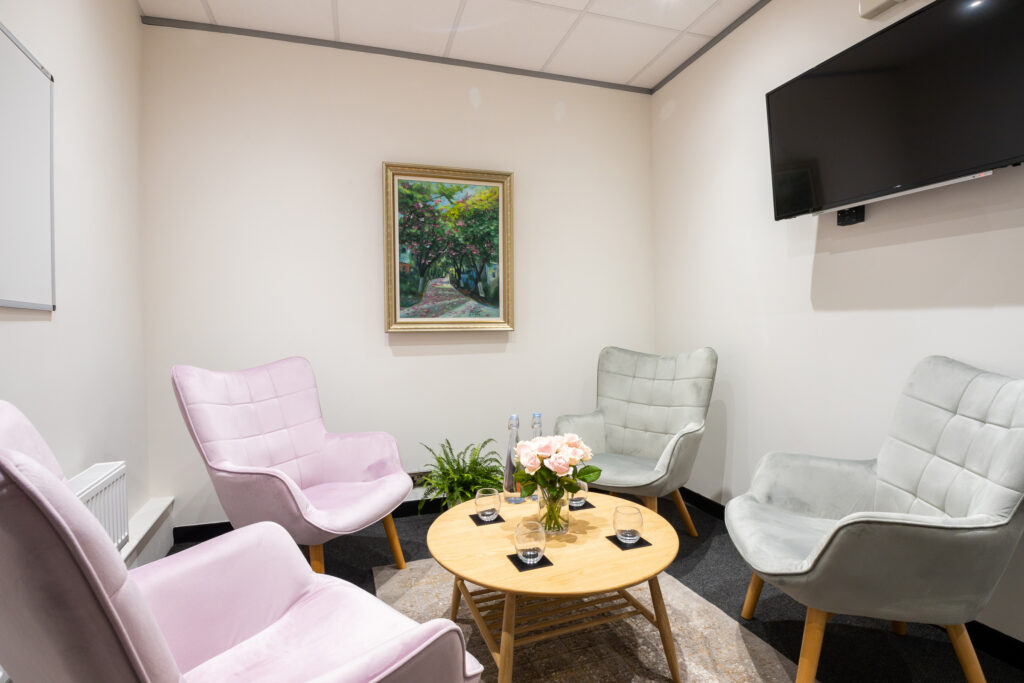
★ Gilmoora House (57-61 Mortimer St): Gilmoora House is a flexible serviced workspace in the heart of Fitzrovia, offering private offices, coworking areas and professional meeting rooms within a calm setting near Oxford Circus. It is also a pet-friendly workplace, with dog-friendly offices and meeting spaces for professionals who prefer to bring their four-legged companions to work.
4. Places that are best for drinking & eating
- ★ ARRO Coffee (44 Great Titchfield St) This Oxford St café leans into the Mediterranean ritual of slow coffee culture.
- ★ 1905 London (40 Mortimer St) A restaurant that blends classic European hospitality with modern menus. For many in Fitzrovia, 1905 isn’t just a place to eat; it’s a dining room that brings neighbours and colleagues together.
- ★ Pahli Hill Bandra Bhai (79-81 Mortimer St): Pahli Hill channels the energy of Mumbai’s neighbourhood kitchens, while Bandra Bhai downstairs recreates the hidden dens of India’s 1970s smuggling scene.
- ★ The George (55 Great Portland St): Reopened in 2021 after a sensitive restoration by JKS Restaurants, this famous bar on Great Portland st 18th-century charm once hosted writers and publishers.

Landmarks and listed buildings to spot (a self-guided walk)
One of Mortimer Street’s quiet strengths is the way its history is written into the architecture. A short stroll along the street becomes a kind of open-air museum, where listed buildings and cultural landmarks tell the story of Fitzrovia’s evolution.
1. Radiant House (No. 34-38)
Built in 1915 for the Gas Light and Coke Company, this Grade II listed gem is best known for its striking turquoise tiles. They’re not just decorative — they nod to early 20th-century optimism in modern materials and urban progress.
2. 67–81 Mortimer Street
This long stretch of Grade II listed buildings shows off Edwardian commercial architecture at its best. The red-brick façades, carved stone details, and tall sash windows were built to impress – a reminder that Mortimer Street was once a busy corridor for trade and craft.
3. The George Public House
A pub with a heritage twist. It’s more than a place for a pint – The George is part of a conservation success story, where an 18th-century coaching inn has been sensitively restored and reimagined for today’s visitors.
Getting to Mortimer Street and moving around
One of Mortimer Street’s biggest strengths is how easy it is to reach and explore. You’re in the heart of Fitzrovia, so most of Central London feels like it’s on your doorstep.
● Nearest Tube stations: Oxford Circus (Bakerloo, Central, Victoria lines) is the obvious gateway, less than a 5-minute walk. Goodge Street and Tottenham Court Road are also close, making the Northern and Elizabeth lines easy options.
● Buses: A steady flow of routes run along Oxford Street and Great Portland Street, useful if you’re heading towards Marylebone, Bloomsbury, or deeper into the West End.
● On foot: Mortimer Street is flat, compact, and built for strolling. Regent’s Park is just a short walk north, while Soho and Covent Garden are within 15 minutes.
● Cycling: Santander Cycles (“Boris Bikes”) are dotted around Fitzrovia, with docking points near Margaret Street and Cavendish Square. It’s a quick way to get between Fitzrovia’s streets if you want to explore more of the Quarter.
Mortimer Street in the heart of Fitzrovia Quarter
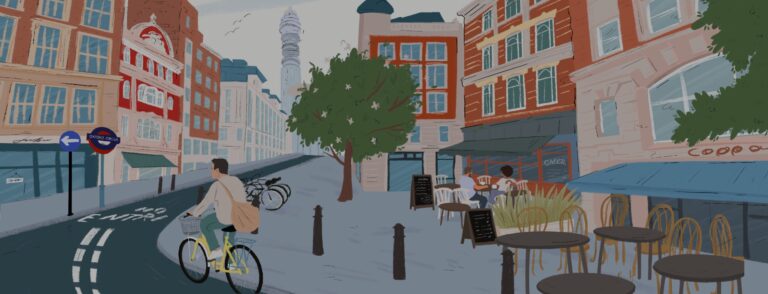
As part of Fitzrovia Quarter, Mortimer Street reflects the area’s unique rhythm: independent shops next to cultural venues, workspaces beside wellness studios, all within walking distance of Oxford Circus.
Spending time here is one of the best ways to understand why Fitzrovia has grown into one of London’s most distinctive and dynamic neighbourhoods.